How to Automate Food Packaging? From ABB Delta Robot Pick-and-Place Case Packing to Robotic Palletizing
Labor shortages, high cycle rates, washdown hygiene and space limits: end-of-line packaging challenges and how automation solves them.
READ
 巨緯科技 chuwei technology


2026.10.29 Announcement
Food packaging automation uses robots, conveyors, vision systems and control technology to perform product pick-and-place, orientation, case packing and pallet loading. It reduces repetitive manual work and improves line balance.
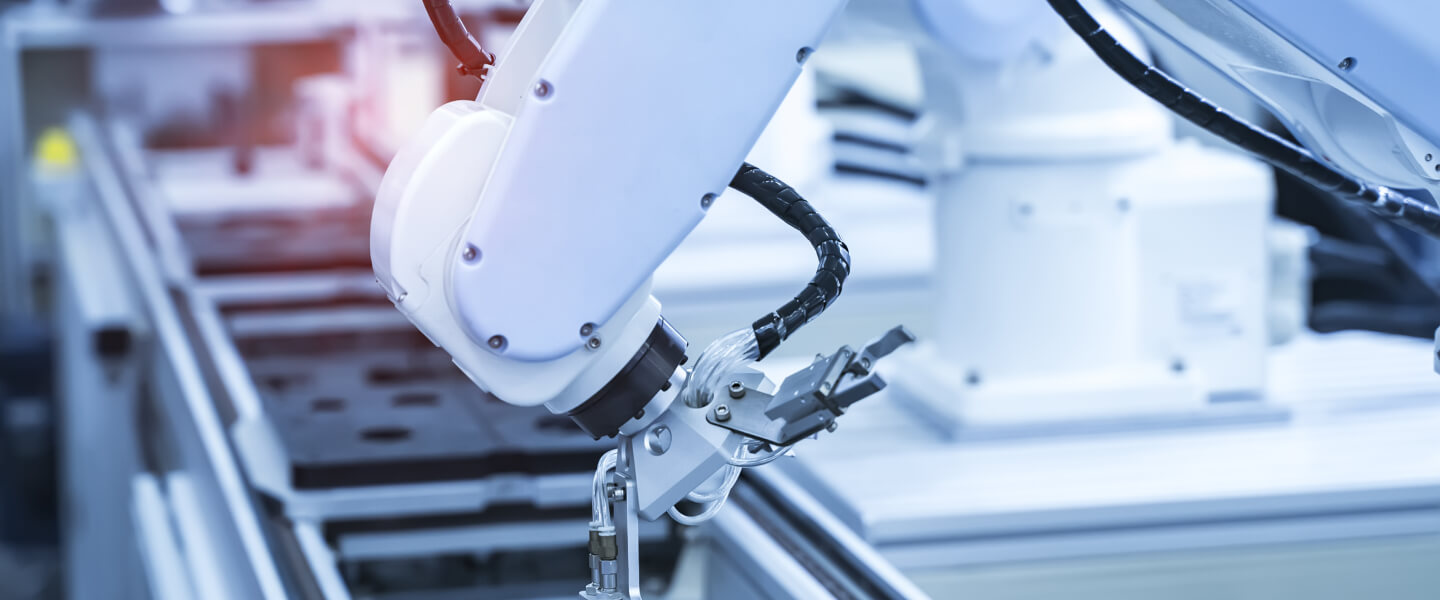
In end-of-line food packaging, the ABB IRB 360 delta robot suits high-speed pick-and-place, sorting and product orientation. Six-axis robots can handle multi-directional picking and case packing based on product characteristics. A robotic palletizing cell downstream then completes an automated flow from product handling to palletized shipment.
The SwiftPack DP-3600 ABB delta robot case packing module from CHUWEI has a standard throughput of 30 pieces per minute (ppm), and multi-module configurations can be evaluated according to line requirements. With proper equipment selection, cycle-time matching and system integration, manufacturers can improve end-of-line efficiency while keeping flexibility for future capacity expansion and product changeovers.
After food products are processed, they still go through sorting, orientation, case packing, carton sealing and palletizing. When these steps rely heavily on manual picking and handling, output becomes sensitive to staffing, work rhythm and product format changes.
For plants that run continuously, simply speeding up one machine does not necessarily raise overall line output. What matters is that upstream and downstream processes work in step, so products do not accumulate, equipment does not sit idle, and the packaging section can absorb everything the production section delivers.
Food packaging automation should therefore not focus on a single robot. Planning should start from product characteristics, packaging format, equipment cycle times and downstream logistics, and build an integrated solution that fits actual production conditions.
Food packaging automation uses robots, conveyors, grippers, vision systems and control integration to automate pick-and-place, orientation, case packing and palletizing.
Depending on product weight, shape, packaging format and throughput requirements, a typical configuration includes three stages:
| Automation Stage | Typical Equipment | Primary Function | Planning Considerations |
|---|---|---|---|
| High-speed pick-and-place and orientation | ABB IRB 360 delta robot | Product sorting, pick-and-place, orientation and pre-packing handling | Product weight, pick cycle time, gripper and conveyor coordination |
| Automatic case packing | Six-axis robot or dedicated case packing module | Places products into cartons or containers in a defined pattern | Pack pattern, product orientation, carton specifications, changeover requirements |
| Automatic palletizing | Six-axis robot and palletizing equipment | Stacks packed cases onto pallets in a defined pattern | Carton size and weight, stack stability, shipping flow |
These stages can be built as separate stations or integrated into a continuous end-of-line packaging flow, carrying products from primary packaging all the way to downstream logistics.

According to a public report by EBC News (Taiwan EBC News) published on October 7, 2026, the production site of a market-leading quick-cook soup manufacturer in Taiwan illustrates the challenges food manufacturers face in balancing high throughput with energy management.
The report states that the plant produces more than 100,000 packs per day, and that its monthly electricity bill in summer exceeded NT$1.5 million. Beyond production and energy use, the opening of the video also shows how finished products are packed and handled at the end of the line with robots and automated equipment. Three automation steps stand out:
These steps show that food plant automation extends beyond processing equipment to product handling, case packing and downstream logistics.
The second half of the report focuses on an energy-saving “black technology,” a levitating chiller. It also raises another issue manufacturers should consider: beyond high throughput, energy efficiency, mechanical wear, maintenance requirements and long-term operating costs are equally important indicators when planning smart manufacturing.
News Video: From Food Production to End-of-Line Packaging Automation
Video source: EBC News (Taiwan EBC News)
This article cites a public media report as industry context and analyzes the related technical topics (high-speed pick-and-place, automatic case packing, palletizing and energy efficiency) from a food packaging automation perspective.
When food plants pursue higher throughput and more stable shipping, end-of-line packaging must balance labor, equipment cycle time, sanitation conditions and floor space.
| Pain Point | Challenge on the Plant Floor | Automation Approach |
|---|---|---|
| Labor shortage and staffing | Repetitive pick-and-place, case packing and handling are hard to staff, and a shortage directly drags down line rate | Deploy automatic pick-and-place, case packing and palletizing, and reassign personnel to material supply, quality control and equipment monitoring |
| High cycle rates and pack quality | Lightweight pouched products must be placed fast, oriented neatly and protected from damage | Delta robot with vacuum gripper and vision positioning for stable pick-and-place and orientation |
| Hygiene and cleaning requirements | High humidity, oil mist and frequent washdown | Stainless steel frame and high-protection configurations |
| Space and expansion limits | Limited plant layout; order volume and SKUs change | Modular equipment and sound layout planning for scalable expansion |
The ABB IRB 360 FlexPicker is a family of industrial robots built on a delta (parallel-link) kinematic structure, designed for high-speed pick-and-place and packaging applications.
Its kinematics suit fast, repetitive picking within a defined work envelope. When food products need to be sorted, oriented or loaded into packaging containers, a delta robot can be evaluated according to product weight, shape and target cycle rate.
High-speed repetitive pick-and-place
The parallel-link structure suits fast, repetitive motion. Combined with conveyor tracking and appropriate positioning, it can handle products on a moving conveyor.
Actual cycle rate depends on the robot model, payload, travel distance, acceleration, gripper weight and pick path. Theoretical robot speed alone should not be used to estimate line throughput.
Versatile grippers and suction options
For pouched, boxed or other food packaging formats, vacuum suction cups, custom grippers or other end-of-arm tooling (EOAT) can be evaluated.
Gripper design should consider product surface material, shape, weight, package integrity and pick stability, to avoid slippage or package damage.
Vision-guided integration
If incoming product position or orientation varies, a 2D/3D vision system can be integrated to identify product position and pose, improving pick-and-place adaptability.
Whether vision is needed depends on how consistently products are presented and the required accuracy. Not every packaging line requires it.
Protection options for food environments
Some ABB IRB 360 models offer stainless steel or washdown-rated configurations, which can be evaluated against sanitation requirements and cleaning methods on the food production floor.
When selecting equipment, confirm the specifications of the robot, frame, grippers, electrical components and peripherals. The IP rating of the robot alone does not determine whether the complete system suits a given washdown environment.
Integrated pick-and-place and case packing
With modular design, a delta robot can be integrated with product conveying, positioning, carton supply and case packing control, reducing unnecessary waiting and handling between stations.
For applications with relatively fixed product formats and high pick frequency, a dedicated case packing module can improve layout efficiency and consistency.
The ABB IRB 360 series offers models with different payloads and working ranges. Evaluate against the technical specifications of the actual model.
Note also that the rated payload of the robot differs from the product weight range of a complete case packing module. The product weight a system can handle also depends on gripper weight, dynamic motion conditions and equipment design.
Selecting food packaging automation therefore requires considering product specifications, equipment cycle time and line configuration together, rather than comparing payload figures alone.
After products are packed into cases, they still need to be conveyed, arranged and stacked onto pallets before entering storage or shipping.
If upstream high-speed pick-and-place and automatic case packing are in place but downstream handling remains manual, the upstream equipment keeps producing while the downstream cannot keep up.
A robotic palletizer can perform repetitive handling and stacking according to carton size, case weight, pallet specification and stacking pattern, improving the handoff after case packing. CHUWEI offers the TitanStack PL-4600 ABB robotic palletizing module, which can be paired with an upstream case packing module.

Delta robots, six-axis robots and palletizing equipment have different kinematics and applications. The choice is not simply which is faster, but which fits the actual task.
| Comparison Item | ABB IRB 360 Delta Robot | Six-Axis Robot | Robotic Palletizing Solution |
|---|---|---|---|
| Primary task | High-speed pick-and-place, sorting and orientation | Multi-directional pick-and-place, more complex case packing | Case handling and pallet stacking |
| Suitable scenarios | Lightweight products, frequent pick-and-place | Complex product orientation or motion paths | Repetitive stacking after case packing |
| Key considerations | Cycle rate, work envelope, payload and gripper | Path and orientation flexibility | Payload, stack height and pallet specification |
| Integration focus | Conveyor tracking, product positioning and gripper | Carton supply, product orientation and packaging equipment | Conveyor lines, pallet supply and shipping flow |
Actual lines can combine different equipment depending on the product. A common combination is a delta robot for high-speed pick-and-place and case packing, with a robotic palletizer downstream. If product orientation is complex or product formats vary widely, a six-axis robot can be evaluated.
The CHUWEI SwiftPack DP-3600 is a case packing module built around the ABB IRB 360 delta robot, designed for high-speed pick-and-place and case packing of lightweight products. Through modular equipment configuration, a suitable case packing solution can be evaluated according to product weight, packaging format and line cycle rate, with options for vision guidance and downstream equipment integration.
| Specification | Details |
|---|---|
| Product name | SwiftPack DP-3600 |
| Robot | ABB IRB 360 delta robot |
| Product weight range per module | 0.1–2.5 kg |
| Standard module throughput | 30 pieces per minute |
| Module expansion | Multi-module configurations available on request |
| Multi-module throughput reference | Up to 60 pieces per minute in the demonstration configuration on the CHUWEI website; actual throughput depends on configuration |
| Vision guidance | 2D/3D vision (optional) |
| Frame and protection | Stainless steel frame, up to IP69K depending on configuration (optional) |
| Downstream functions | Carton sealing and dynamic checkweighing available on request (optional) |
Actual payload, throughput, protection rating and optional functions are subject to the final equipment configuration and technical specifications.
As manufacturing moves toward high-mix, low-volume production and fast changeover, line planning must weigh not only speed but also equipment wear, maintenance, cleanliness and flexibility in product switching.
The levitating chiller featured in the EBC News report reflects a design philosophy of “contactless operation to reduce mechanical wear.” The same thinking applies to other areas of industrial automation, though each system’s operating principle and benefits must be evaluated separately.
CHUWEI also has integration capability for the B&R ACOPOS 6D magnetic levitation transport platform. Intelligent shuttles levitate magnetically above motor segments and move without contact, with low wear and no particle generation. Each shuttle can be controlled independently, which suits high-mix, low-volume, fast-changeover production. Combined with robots and vision systems, it enables a scalable, “learning-enabled” smart production line architecture.
Before planning food packaging automation, we recommend gathering the following information to support equipment selection and initial evaluation.
| Item | Information to Prepare |
|---|---|
| Product conditions | Package format, weight, dimensions, surface characteristics |
| Target throughput | Pieces per minute, operating hours per day, peak demand |
| Case packing requirements | Carton dimensions, units per case, pack pattern |
| Floor space | Available area, existing conveyor layout |
| Cleaning conditions | Washdown method, cleaning agents, sanitation standards |
| Downstream logistics | Pallet specification, stack height, shipping method |
| Future expansion | Changeover frequency, throughput growth plan |
Food packaging automation uses robots, conveyors, grippers, vision systems and control technology to automatically perform product pick-and-place, orientation, case packing and pallet stacking. It reduces repetitive manual work and improves line stability.
The ABB IRB 360 suits high-speed pick-and-place, sorting, orientation and case packing of lightweight products, such as pouched and boxed foods. Selection requires evaluating product weight, shape, gripper, work envelope and target cycle rate.
A delta robot uses a parallel-link structure suited to fast, repetitive pick-and-place within a defined work envelope. A six-axis robot offers greater tool orientation flexibility, suited to multi-directional handling and more complex case packing. Selection depends on the task, product characteristics and overall cycle time.
A single standard SwiftPack DP-3600 module delivers 30 pieces per minute for products weighing 0.1–2.5 kg. The multi-module configuration shown on the CHUWEI website can reach 60 pieces per minute. Actual throughput is confirmed according to the product, gripper and upstream/downstream conditions.
Yes. During integration, confirm the capacity of the case packing and palletizing stations, the conveying method, carton specifications, pallet supply and safety guarding, so that both stations are cycle-time matched and neither limits overall line output.
Based on the plant’s washdown method, confirm the specifications of the robot model, frame material, protection rating, gripper materials and electrical components. If high-pressure washdown is involved, check the protection rating of every component in the complete system, not only the robot itself.
The SwiftPack DP-3600 can be evaluated for downstream functions such as carton sealing and dynamic checkweighing. The actual integration method depends on line layout, package format, target cycle rate and peripheral equipment, and is confirmed per project.
Before implementation, take inventory of the target cycle time at each station (feeding, pick-and-place, case packing, sealing and palletizing), find the process with the lowest capacity, and reinforce it by adding modules, adjusting conveying or adding buffers, so that line output is not limited by any single station.
The benefit of food packaging automation depends on equipment selection, cycle-time matching and integration across upstream and downstream processes.
From the ABB IRB 360 delta robot’s high-speed pick-and-place, through the SwiftPack DP-3600 case packing module, to downstream robotic palletizing, each step must be planned around product characteristics, throughput requirements and site conditions.
For manufacturers, what matters is not the top speed of any single machine, but stable handoffs between stations, less repetitive manual work, and room to grow capacity and handle product changeovers.
CHUWEI specializes in industrial automation equipment and system integration, offering ABB delta robot case packing modules and related automation solutions to help manufacturers evaluate equipment configurations and line integration based on their actual needs.
Prepare your package format, weight, dimensions, target throughput and site layout, and contact us to evaluate the right pick-and-place, case packing and palletizing configuration.
👉 Contact Us:
👉 SwiftPack DP-3600:
https://chuweitw.com/chu_product/swiftpack-dp-3600/
👉 ABB IRB 360 蜘蛛手臂:
https://chuweitw.com/chu_product/abb-irb-360/
Labor shortages, high cycle rates, washdown hygiene and space limits: end-of-line packaging challenges and how automation solves them.
READ

CHUWEI Technology will be participating in PACK EXPO International 2026 in Chicago. We will be providing ABB robotic, packaging automation, and smart manufacturing solutions for secondary packaging. Visit us at booth LL-9821.
READ

Integrating an ABB robotic arm with the B&R 6D magnetic levitation transport platform, the system enables multi-product mixed-line manufacturing and real-time optimization — driving intelligent upgrades for high-variation production environments.
READ